
A Partnership Built for Impact
In February 2025, Compass Health partnered with the Bellingham Fire Department (BFD) to enable a behavioral health professional, called a Designated Crisis Responder (DCR), to work alongside BFD’s team in downtown Bellingham, placing behavioral health expertise directly into the city’s emergency response system. The goal was simple but critical: ensure a trained behavioral health professional could be dispatched to emergency calls where mental health and/or substance use is a factor, supporting de-escalation, assessing needs, and connecting individuals to appropriate care in real time.
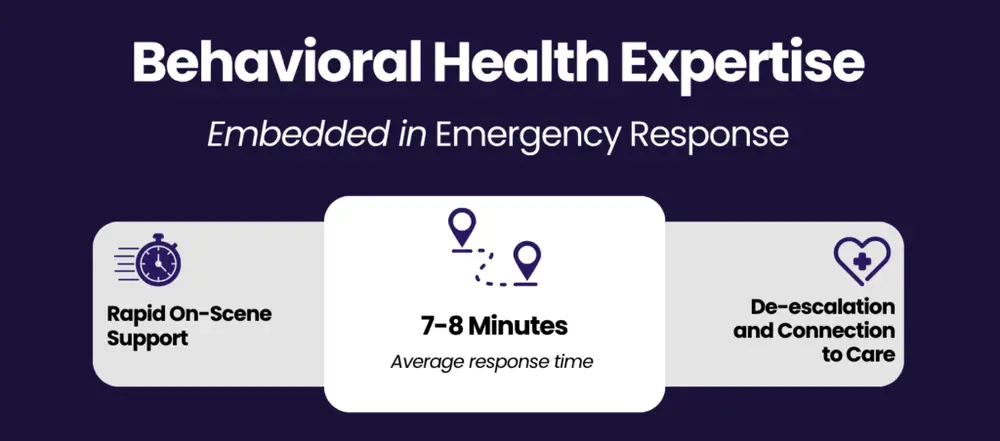
Within a few months, the impact was clear. The embedded DCR was averaging a response time of just seven to eight minutes – arriving on scene alongside the fire department or EMS, or independently, to support individuals in crisis and connect them to services that promote stabilization and recovery.
According to those behind the program, its success comes down to the partnership itself – pairing organizations that share a commitment to showing up for community members in their most vulnerable moments.
Rethinking How 9-1-1 Calls Are Answered
The partnership between Compass Health and the Bellingham Fire Department builds on a longstanding relationship between the two organizations, one shaped by a shared focus on meeting evolving community needs. The decision to embed Jeremy Caplan, community outreach DCR at Compass Health, within the department grew out of those same conversations – centered on how to respond faster and connect people in crisis with the right kind of care.
Chelsea Van Vooren, program manager for Compass Health’s Whatcom County Mobile Crisis Team (MCOT)
Steve Larsen, Bellingham Fire Department EMS Captain and Community Paramedic
Bringing Together the Right Pieces
The partnership works because it brings together the right pieces of what can otherwise be a complex puzzle. By having a community paramedic and a DCR arrive on scene together, Compass Health and the Bellingham Fire Department ensure the right supports are available. Whether the situation calls for urgent medical treatment or de-escalation of a behavioral health emergency, the appropriate expertise is there.
As Bellingham Fire Department EMS Captain and Community Paramedic Steve Larsen puts it, it’s like having a Swiss Army knife in your toolkit – the right combination of tools in a single response.
How the Pieces Work Together
Community paramedics – like Steve Larsen – are often the first on scene, trained to assess medical needs and stabilize immediate risks. DCR Jeremy Caplan brings specialized behavioral health expertise – helping to de-escalate situations and determine appropriate next steps for care. Together, they deliver the coordinated support needed to ensure people in crisis receive the right care at the right time.
The Model in Action
Co-response looks different in every community. Here’s how it works in Bellingham.
Building Pathways to Recovery
The partnership between Compass Health and the Bellingham Fire Department grew out of real challenges the community was facing, including high overdose rates. By dispatching Jeremy to behavioral health-related calls, people in crisis are met with timely, specialized care when they need it most – and that support is making a real difference in their outcomes.
Crisis Response at Compass Health
Compass Health has an expansive footprint in Whatcom County, delivering a continuum of services, including outpatient therapy, mobile crisis outreach, crisis stabilization, and more, to adults, youth, and families. It’s that continuum, specifically the work happening within the organization’s mobile crisis outreach team (MCOT), that sparked the idea that this kind of rapid, on-scene response could be done in partnership with the Bellingham Fire Department.
A New Way Forward
What’s happening in Bellingham as a result of this partnership speaks to the life-saving impact that can occur when you pair first responders and behavioral health professionals. You’re taking two systems that traditionally operate in parallel and bringing them together to address persistent community challenges. The model is working, but as BFD Division Chief of EMS Scott Ryckman notes, it isn’t a one-size-fits-all; it’s tailored to meet the unique needs of the community it serves.
Called to Serve
What’s happening in Bellingham as a result of this partnership speaks to the life-saving impact that can occur when you pair first responders and behavioral health professionals. You’re taking two systems that traditionally operate in parallel and bringing them together to address persistent community challenges. The model is working, but as BFD Division Chief of EMS Scott Ryckman notes, it isn’t a one-size-fits-all; it’s tailored to meet the unique needs of the community it serves.